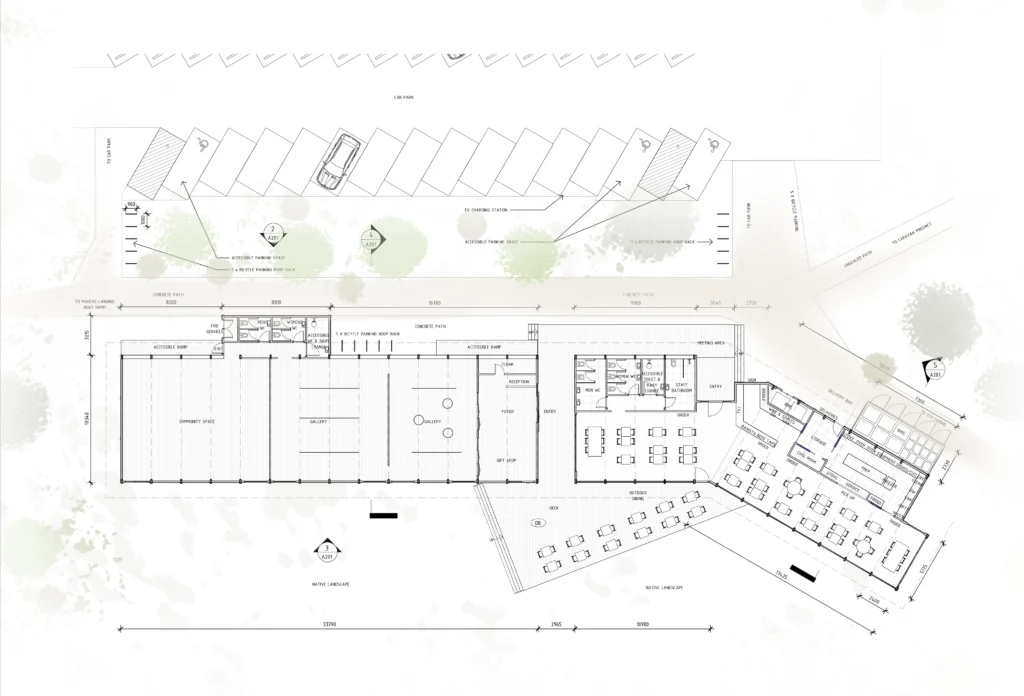
MAHERS LANDING ECO TOURISM RETREAT
Location
Mahers Landing, Bass Coast, Victoria
Country
Bunurong
Completed
Unbuilt – 2023
Project Team
Andrew MacKinnon, Reece Julian, Raphaela Glavas, Gemma Border, Ella Johnson, Jacob Bowers-Bone
Builder
Clancy Constructions
Photographer
Daniel Fuge
Text
Stephen Crafti
Awards
2020 Victorian Architecture Awards, Shortlist
2021 BLT Built Design Awards, Winner
2021 Houses Awards, Shortlist
Media
The Local Project
Lunchbox Architect
Dwell
Grand Designs Magazine
Est Living
House & Garden
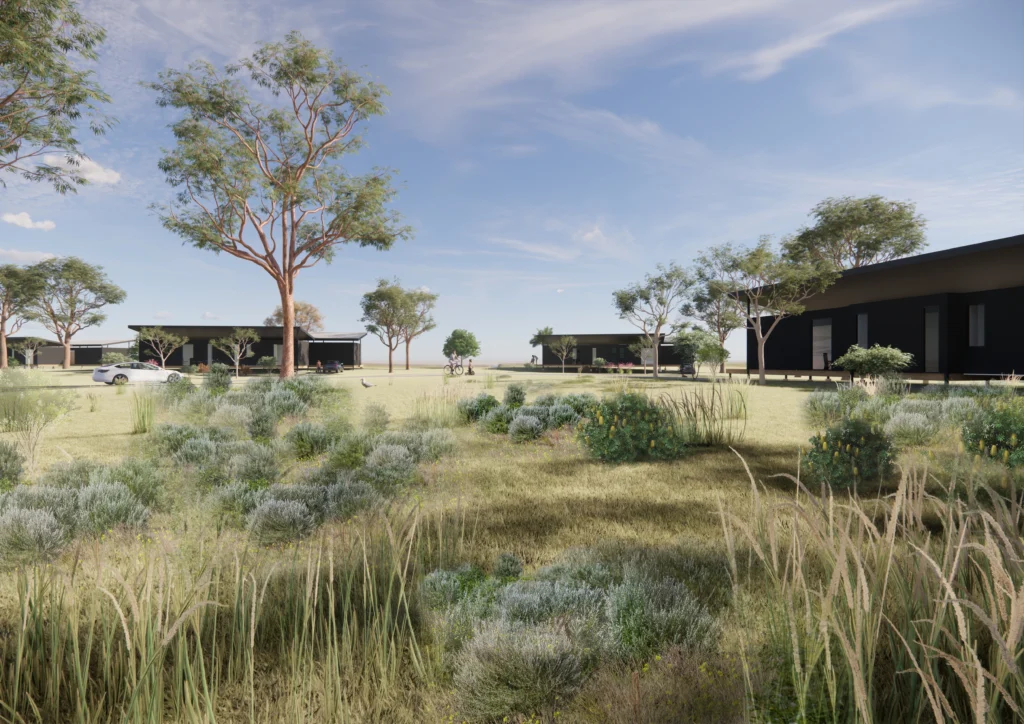
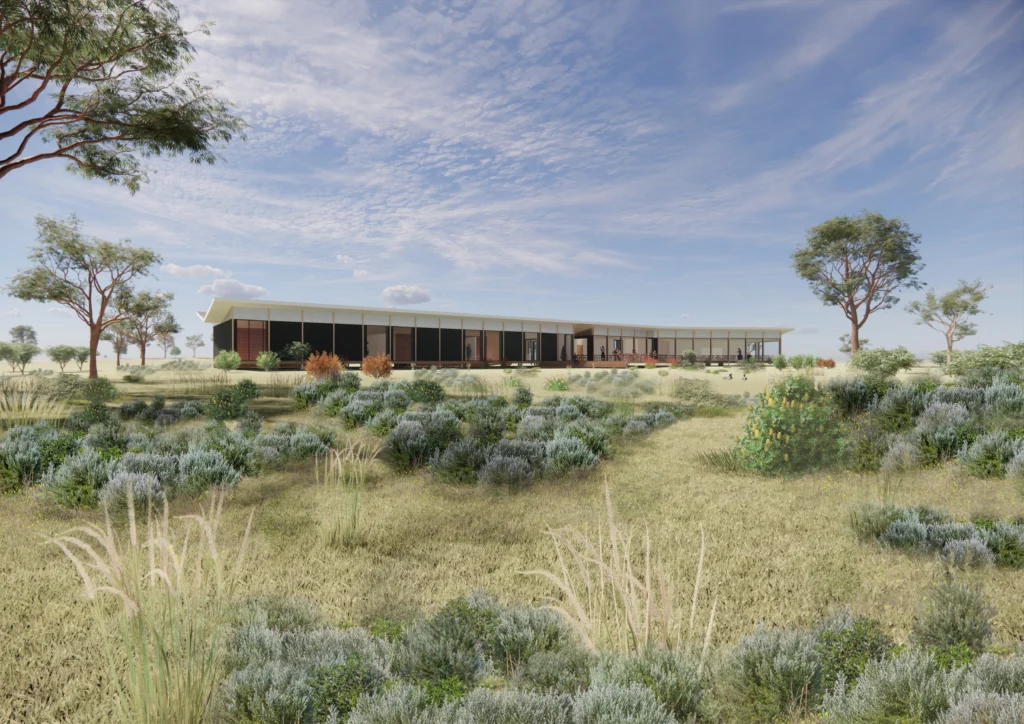
The architecture at Mahers Landing is conceived as an extension of the landscape rather than an imposition upon it. Building scale, siting and material selection are carefully calibrated to sit within the coastal environment, allowing the restored saltmarsh and native planting to remain the dominant presence across the site.
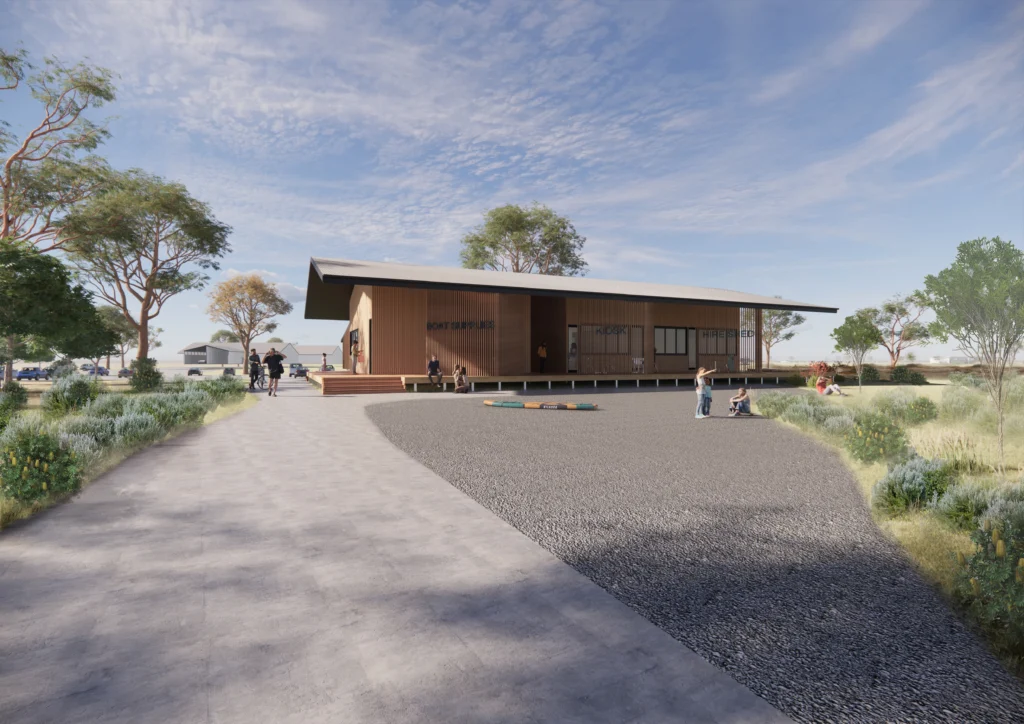
A restrained material palette establishes cohesion across the precinct. Australian silvertop ash and black-stained timber form the primary cladding, while blackbutt is used to articulate decks and verandahs, including the restaurant’s outdoor dining areas and the private terraces of the eco cabins. Timber batten screens provide shading, wind protection and privacy, moderating the coastal conditions without enclosing the buildings unnecessarily. Concrete paths and amenity slabs incorporate local aggregates sourced from the Anderson Inlet region, grounding the development materially within its context. Gravel pathways and recycled timber duckboard walkways connect the various precincts while maintaining permeability and allowing the landscape to remain legible.
The built form draws from the simplicity of the Australian vernacular. Rectilinear volumes and pitched roofs reference the agrarian history of the site while allowing for efficient construction and reduced material waste. Galvanised corrugated roofing, steel structure and black-framed openings establish a consistent architectural language across all buildings. While the forms are modest, detailing through roof pitch, eave depth and carefully proportioned openings gives each building clarity and presence.
Siting and aspect are fundamental. The boating retail and kiosk building addresses the water directly, reinforcing its relationship to the existing boat ramp and associated facilities. A continuous verandah provides sheltered, shaded edges in response to prevailing coastal winds. The gallery and restaurant occupy a more central position within the site, immersed in saltmarsh and native planting while maintaining framed views to Andersons Inlet. Eco cabins are dispersed within the revegetated landscape, each oriented to capture outlook while maintaining privacy and seclusion.
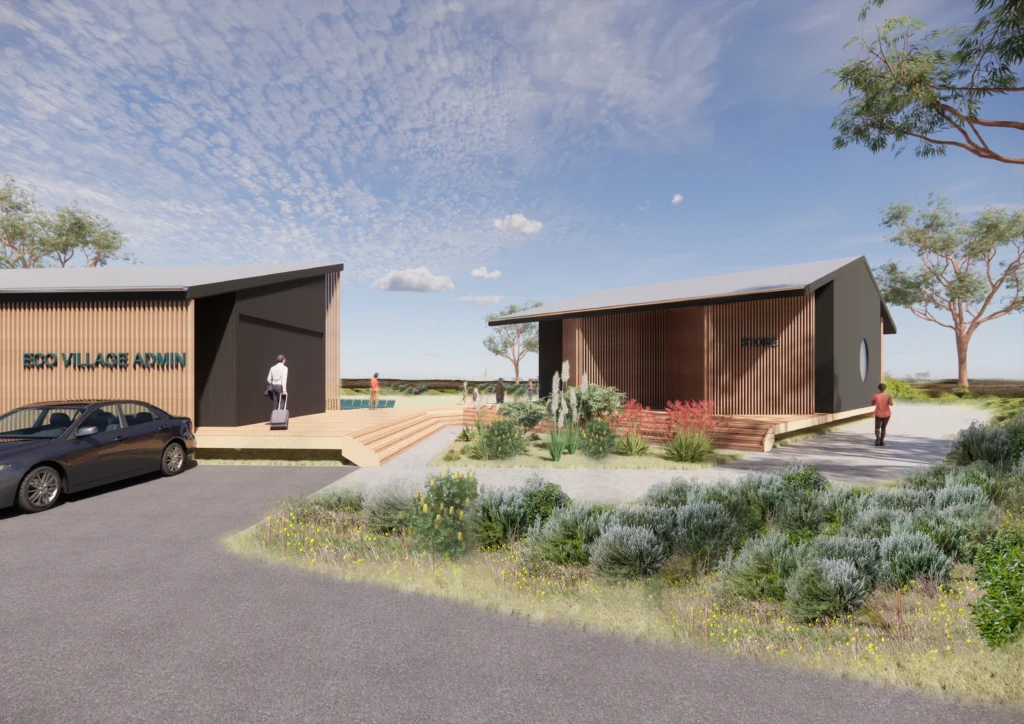
Openness is achieved through generous glazing and outdoor rooms rather than expansive internal volume. Large doors and windows extend the restaurant and gallery toward the coast, while cabins open onto private decks. Amenity buildings are naturally ventilated and largely open to air movement, responding to climate with minimal enclosure.
Environmental performance underpins the architectural approach. Buildings are elevated on stump footings, reducing concrete use and allowing water to pass beneath during future inundation events. Finished floor levels are set above projected 2100 storm tide levels, ensuring resilience without excessive intervention in the terrain. Passive cooling is achieved through cross ventilation and deep eaves, while passive solar gain and insulation support winter comfort. All buildings are electric, supported by solar generation, heat pump hot water systems and energy-efficient fittings. Electric vehicle charging and bicycle infrastructure encourage lower-impact transport.
The broader landscape strategy strengthens ecological resilience. Coastal banksia woodland, saltmarsh, estuarine wetland and other native vegetation communities are reinstated, transforming degraded grazing land into functioning habitat. Elevated boardwalks traverse saltmarsh areas, allowing public access without damaging sensitive ecologies. The majority of the 253-hectare site remains permeable, with development concentrated lightly across the landscape.
The proposal positions architecture as enabling infrastructure rather than spectacle. Buildings provide shelter, orientation and amenity, while the restored coastal environment remains the defining experience of Mahers Landing.