The Local Project
Lunchbox Architect
Dwell
Grand Designs Magazine
Est Living
House & Garden
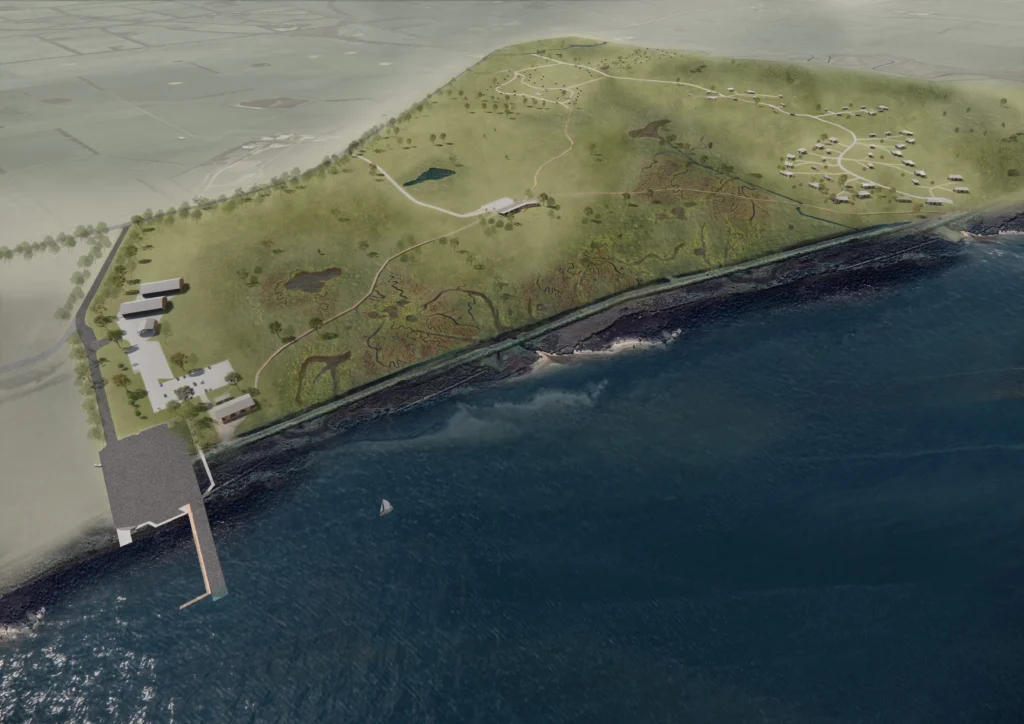
Rebecca Naughtin Architect was engaged to undertake the urban planning and masterplanning study for underutilised, poor-quality grazing land at Mahers Landing, and to coordinate a broad consultant team in developing a viable eco-tourism vision for the site. The project establishes a long-term framework that balances tourism infrastructure, landscape restoration and community use along the edge of Andersons Inlet.
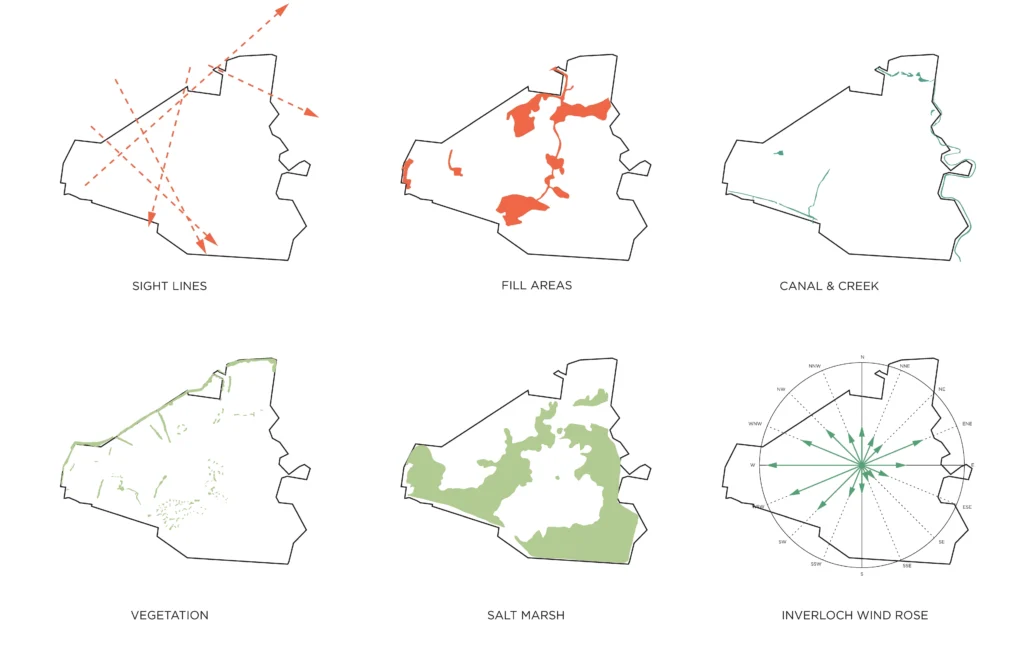
The masterplan is organised landscape first. Existing pastoral land is progressively rehabilitated through native revegetation, forming the primary structure for movement, outlook and development control. Built form is deliberately dispersed and carefully sited to maintain view corridors across the site, preserving visual connections to Andersons Inlet and Venus Bay. Density is moderated to ensure open space remains dominant, allowing the coastal setting to shape the visitor experience.
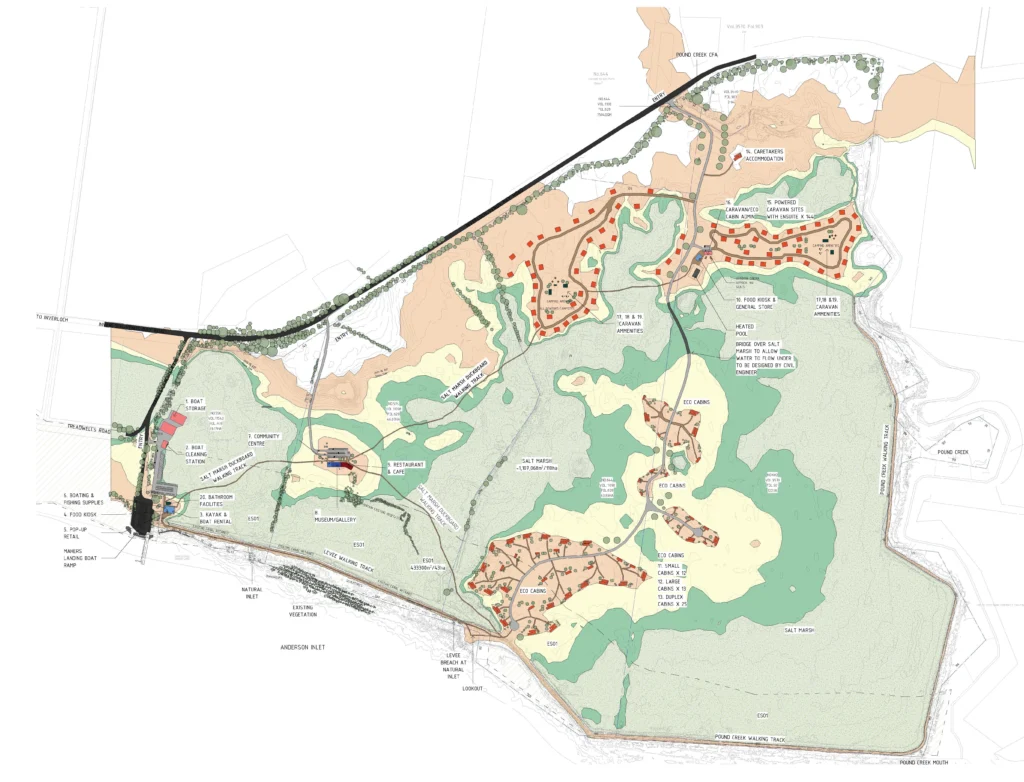
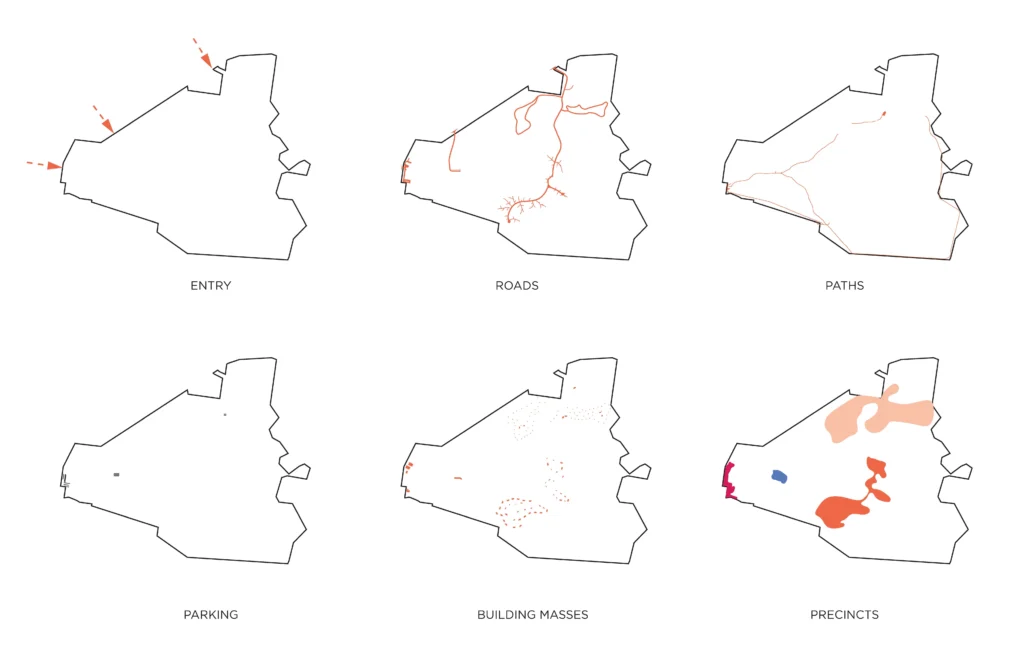
Clear zoning underpins the planning strategy. A consolidated boating and water recreation precinct strengthens the adjacent Victorian Fisheries ramp through coordinated boat storage, cleaning facilities, parking and amenities. Concentrating infrastructure in this location reduces ad hoc impact elsewhere on the site and formalises an already active node.
A cultural and community spine anchors the civic centre of the proposal. A gallery and museum provide space for local history and Aboriginal cultural expression, supported by flexible community facilities designed for year-round events. A restaurant showcasing regional produce reinforces local identity and strengthens economic resilience.
Accommodation is distributed lightly within the rehabilitated landscape. Solar-powered cabins and powered caravan sites are positioned to minimise visual impact while encouraging longer stays. Supporting infrastructure, including shared amenities and co-working facilities, allows the precinct to function beyond peak tourism periods.
Indigenous consultation informs both cultural programming and land management strategy, embedding stewardship within the structure of the masterplan. The proposal is conceived as an adaptive framework rather than a fixed outcome, enabling staged delivery while maintaining a clear balance between ecology, infrastructure and regional prosperity.
Mahers Landing is ultimately a planning exercise in restraint and coordination, transforming degraded farmland into a structured, resilient and economically productive coastal landscape.