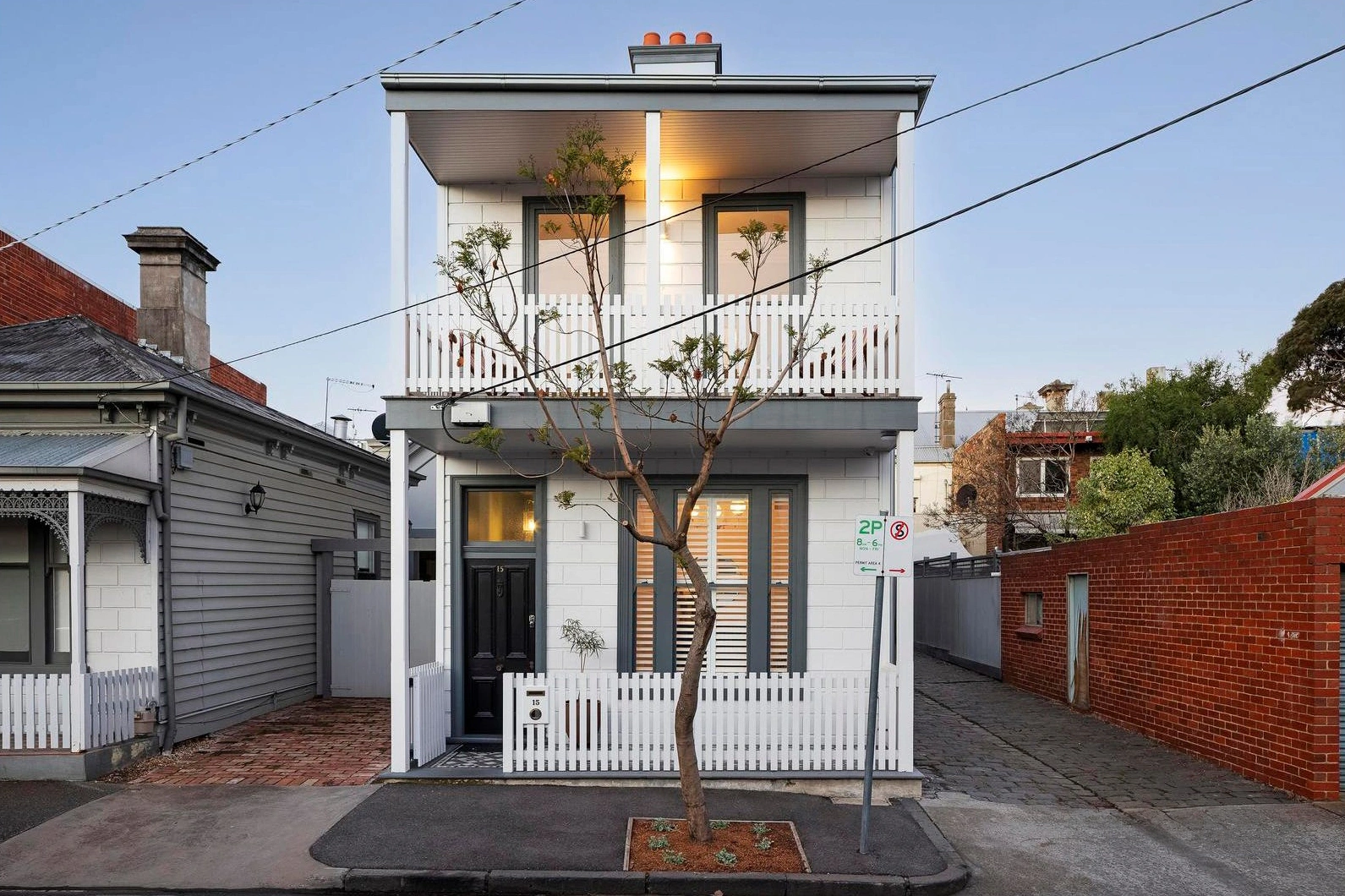
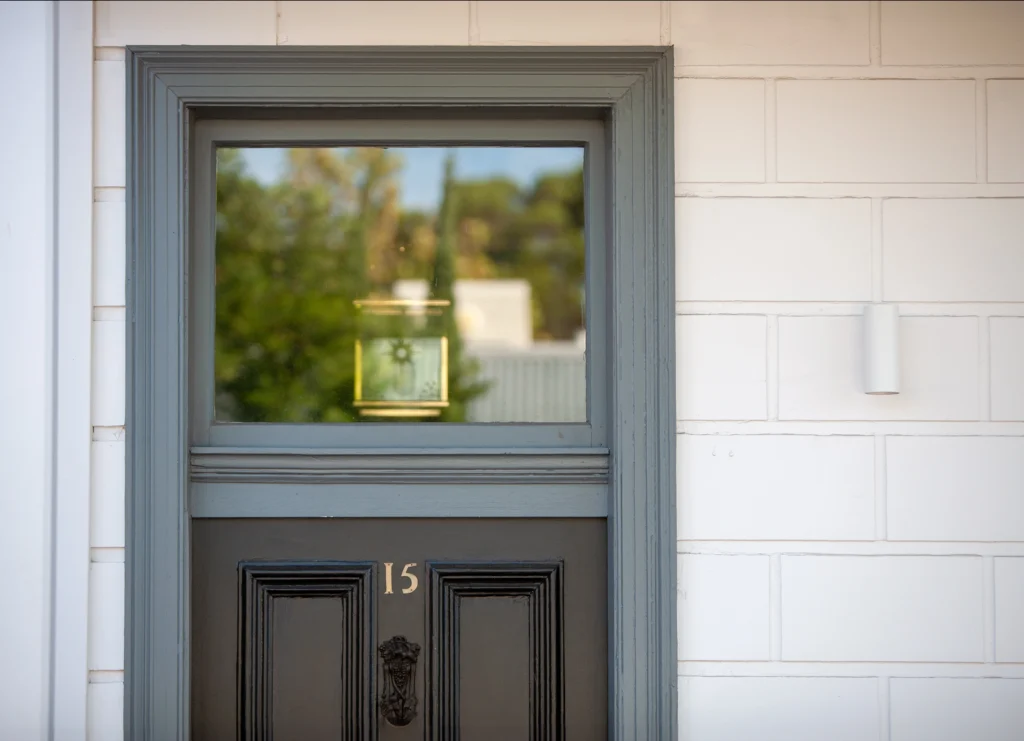
At first encounter, the South Melbourne House presents itself as settled rather than new. Once informally dubbed the “Jumanji House” in the studio, a nod to its encroaching vines, crumbling fabric and small animal inhabitants, the familiar weatherboard frontage concealed a building that had edged close to failure. Years of vacancy and neglect had compromised the structure, yet enough integrity remained to support not replacement, but repair.
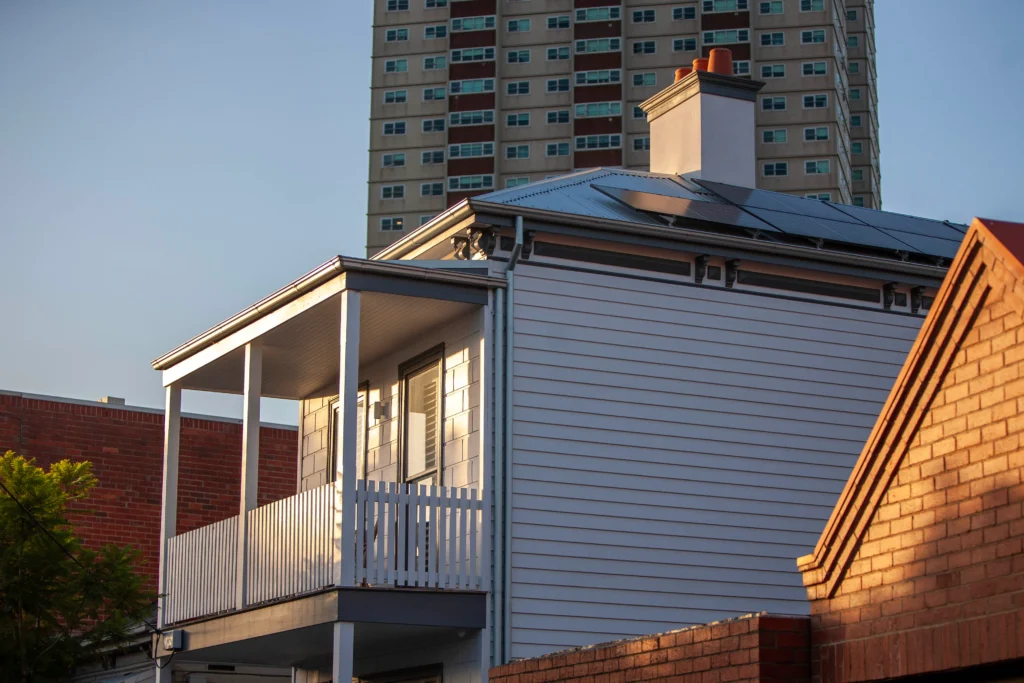
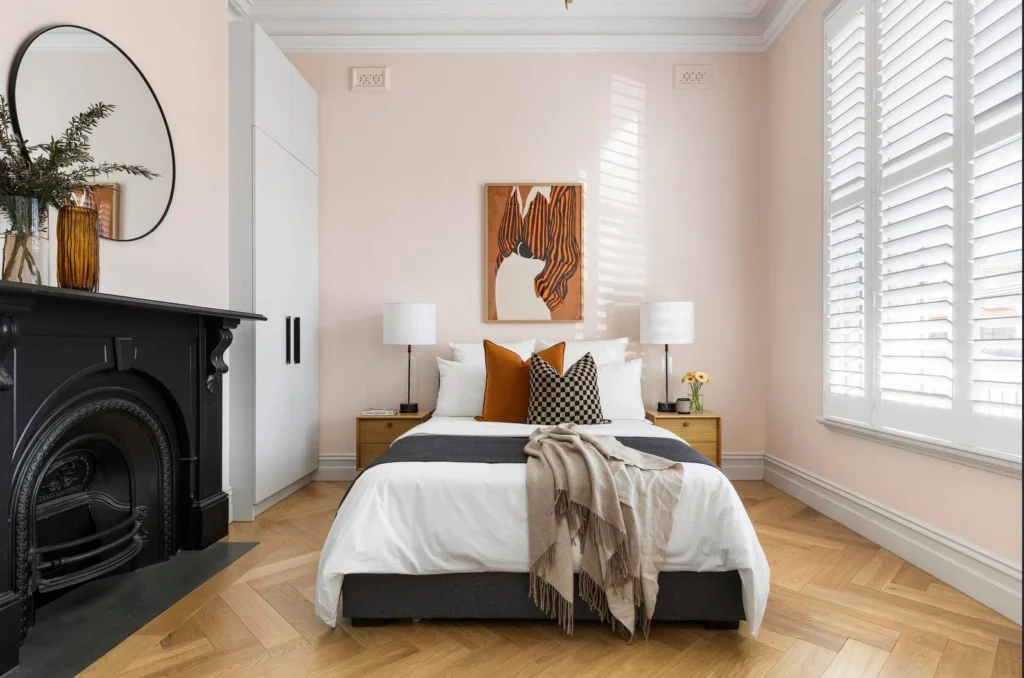
The project begins with patience. Original elements were carefully conserved and re-established as the spatial and emotional anchors of the house. The central stair, ceiling roses and key heritage details were retained and reintroduced with restraint. The front verandah, long lost, has been reconstructed with reference to neighbouring period houses, restoring a quiet continuity to the streetscape.
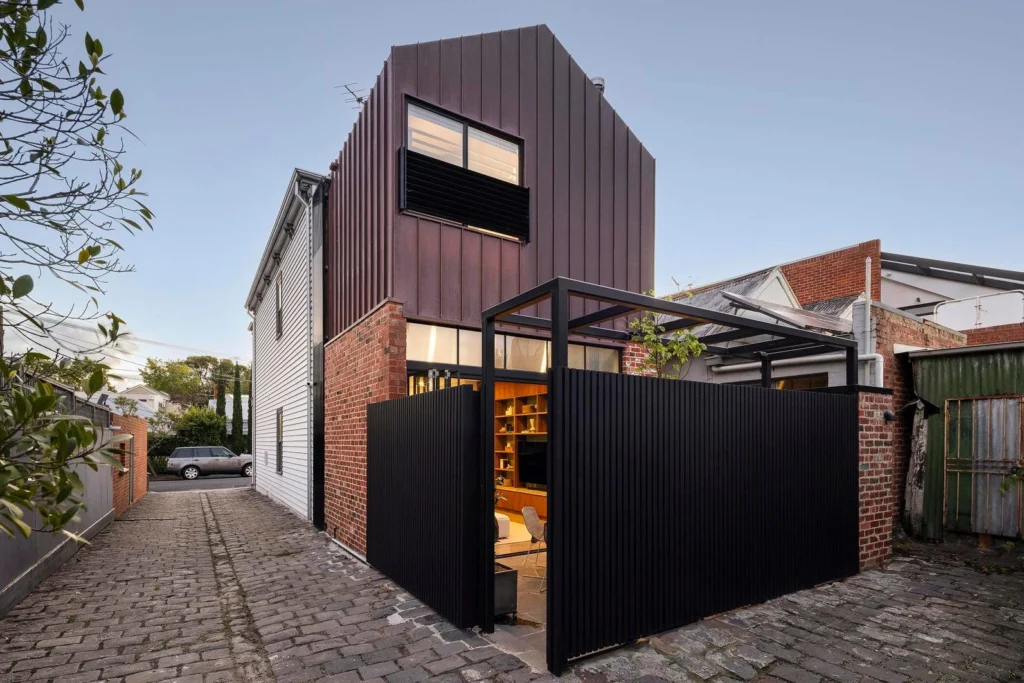
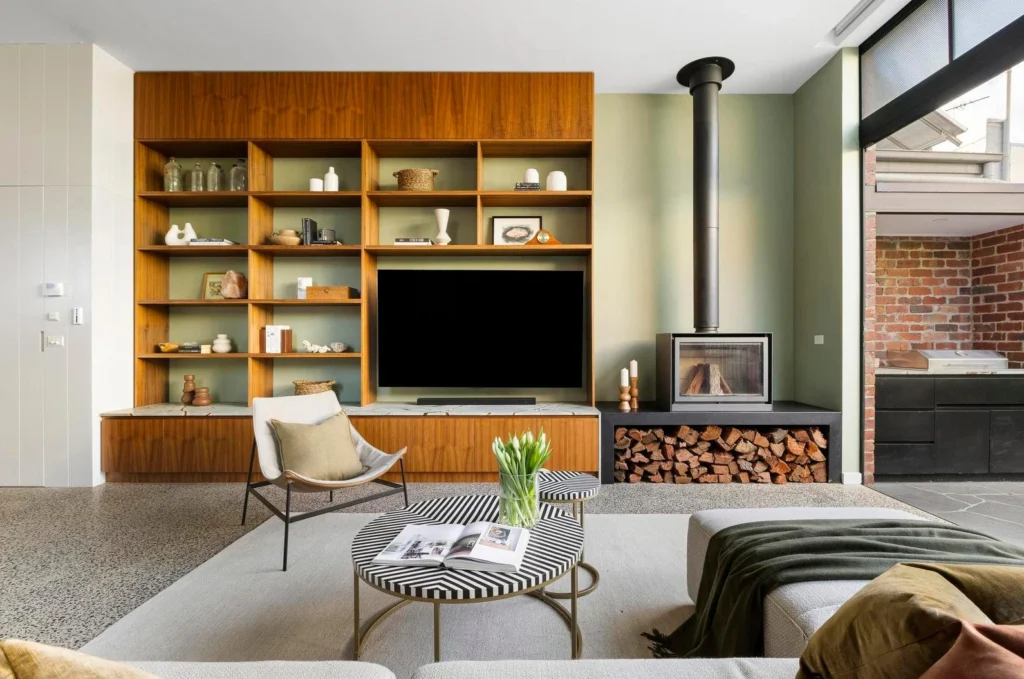
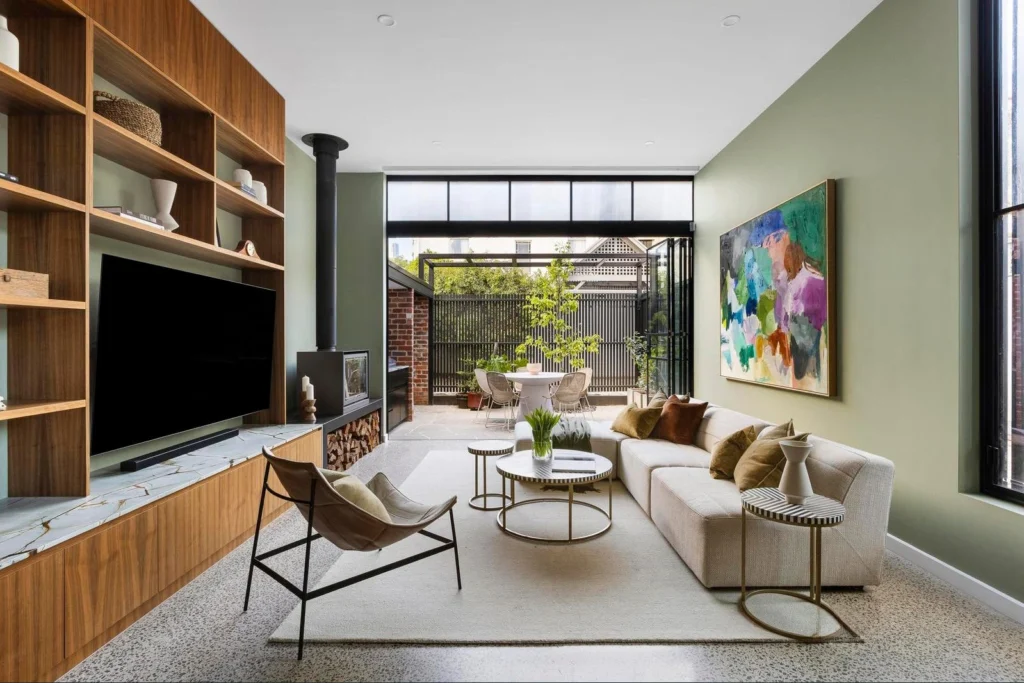
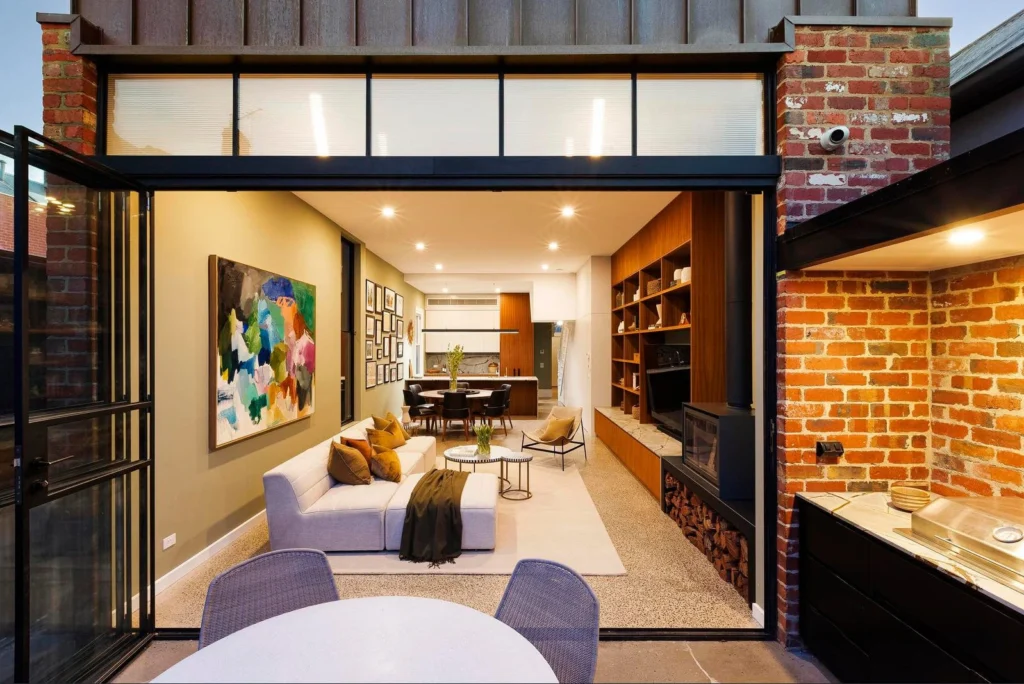
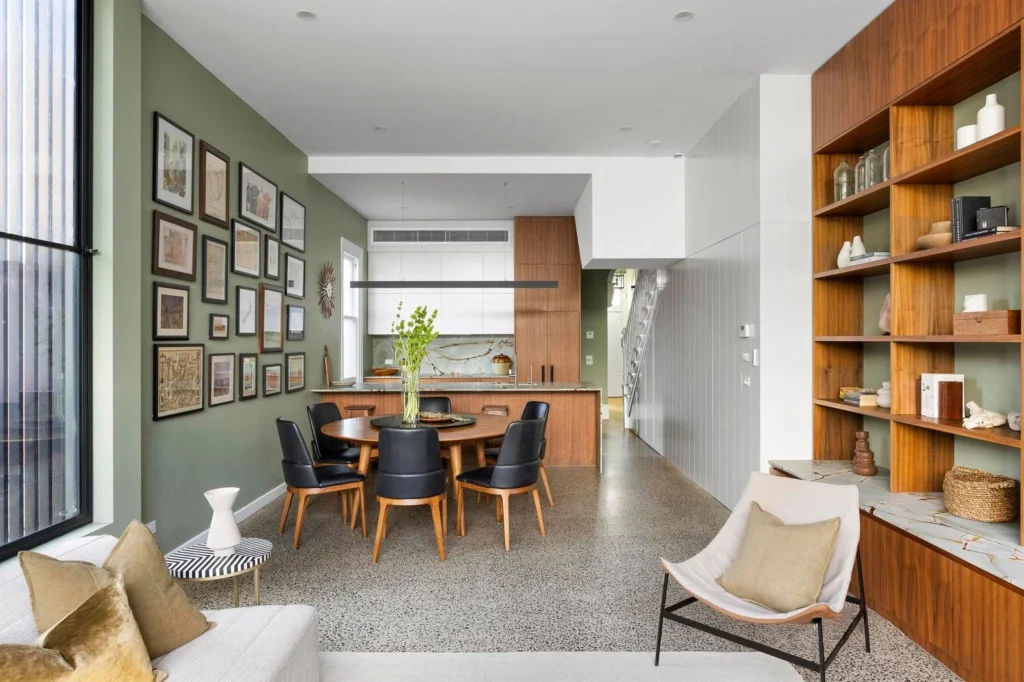
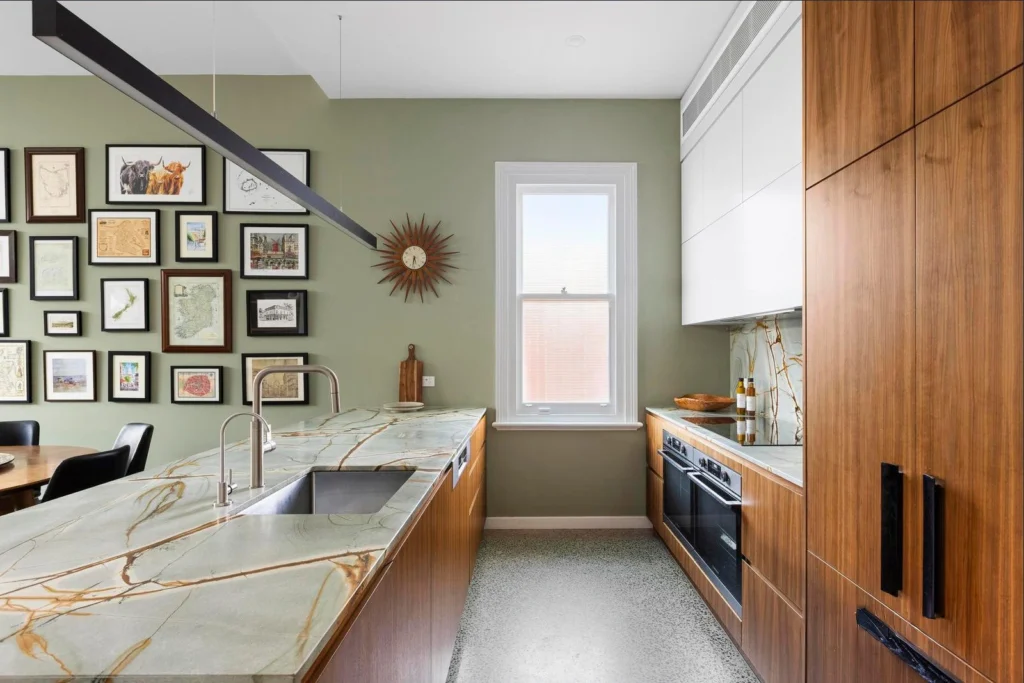
Behind this composed frontage, the plan opens into a contemporary addition that recalibrates light, volume and daily use. Copper cladding was selected not as a device for contrast, but for its capacity to weather and age alongside the original fabric. Inside, generous ceiling heights and fireplaces sit comfortably with new insertions: a soft sage palette, a quartzite kitchen bench, and spaces grounded in both material presence and memory.
Steel-framed doors dissolve the threshold between inside and out, drawing daylight deep into the plan and extending daily life into the garden and alfresco spaces. The South Melbourne House is not a reinvention, but a recalibration. It builds carefully on what was already there, shaping a home that feels restored, composed, and attuned to contemporary family life.